


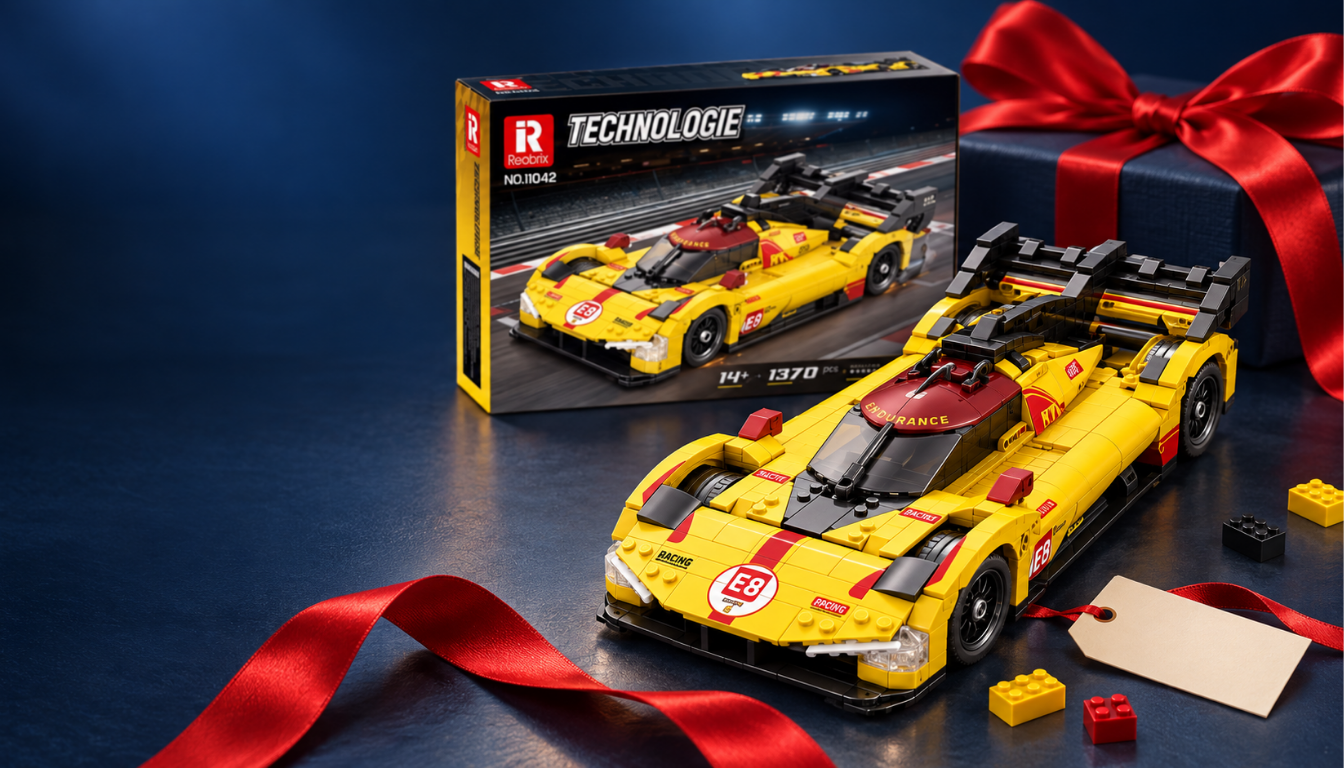
A construction set can be a gift that doesn’t end the moment it’s unwrapped. First comes anticipation, then a few hours or evenings of building, and finally a finished model that stays on a desk or shelf. But for the gift to really match the recipient’s taste, it’s not enough to pick the biggest box.
The best starting point is the recipient’s interests. The number of pieces, functions, and size matter—but only as a second step. Below you’ll find a simple way to choose a model without guessing.
1. Start with the world that interests the recipient
Think about what this person reads, what movies they watch, and what items they keep on the shelf. A car enthusiast will likely pay attention to body proportions, wheels, and mechanical details. A history lover may be more willing to spend a few evenings on a ship or military vehicle. Someone interested in Japan and architecture will appreciate a model that can be combined with other buildings into one street.
The most common gift directions are:
- automotive: sports, racing, classic cars, and technical models;
- history and military: ships, aircraft, and vehicles inspired by a specific era;
- architecture: single buildings and series that let you create a larger display;
- machines and mechanics: vehicles with moving functions or remote control;
- collecting: models with a shared scale and style that look great displayed together.
If you don’t know the exact model but you do know the recipient’s passion, you’re already much closer to a good choice. Browse our catalog by category, not just by price.
2. Match the building experience, not just the final result
Two people can be delighted by the same finished model, yet expect a completely different path to completing it. One is looking for a calm evening project. Another wants a build they’ll come back to all weekend. A third values mechanisms most and testing the functions after the build.
Before buying, answer three questions:
1. Has the recipient built larger models before?
2. Do they enjoy longer, multi-stage projects?
3. Do they prefer a display piece, or a model with functions to operate?
The number of pieces alone isn’t a full measure of difficulty. A model with repeating sections can build differently than a smaller construction with many gears and moving connections. So it’s worth also looking at the suggested age, function description, dimensions after assembly, and photos of the build stages.
3. Check the size of the finished model
A large set makes an impression, but it needs the right amount of space—both during building and afterward. This is especially important for ships, complex technical cars, and larger architecture.
Don’t assume the model will fit on a standard shelf. Check three dimensions: length, width, and height. Add a few centimeters of clearance so the build can be placed and removed safely. For a gift, it’s worth discreetly making sure the recipient has some free space on a desk, shelf, or in a display case.
A good example is the REOBRIX 77051 Bismarck Battleship. After assembly it is 83.7 cm long, so it’s a project where the space is best planned before opening the box.
4. Choose a gift that can start a collection
A single model can be a standalone display piece, but a series adds extra value: the recipient can later grow their collection in the same style. This is a safe direction when you know someone likes to build regularly.
Japanese city lets you start with a restaurant, a shop, or an arcade, and then add more buildings. Meanwhile, the REOBRIX cars category makes it possible to build a shelf around automotive themes, a chosen scale, or a specific body type.
When choosing the first set in a series, check whether the next models match the recipient’s interests. Then the gift becomes not only a finished build, but also the beginning of future projects.
5. Decide: display model or functional model?
A display model is bought primarily for its form, details, and the satisfaction of completion. A functional model adds moving parts, drive, control, or lighting—depending on the specific set.
Neither choice is better for everyone. A collector may value a cohesive silhouette and the way it’s presented. A tech fan will want to look into the mechanism, see the parts working, and operate the build. So don’t automatically assign remote control to everyone who likes cars. First determine whether they’re more into modeling or mechanics.
6. What not to do when choosing
The most common mismatches come from four mental shortcuts:
- “more pieces always means better”;
- “a more expensive model will definitely make a bigger impression”;
- “every car fan wants a remote-controlled model”;
- “size doesn’t matter, we’ll find space later.”
It’s much safer to choose a model matched by theme and scale than the biggest set in a random category. If you’re torn between two builds, compare their finished dimensions, functions, and the character of the building process. On the day you buy, also check availability—the offer may change.
Quick checklist before ordering
Before adding a set to your cart, check:
- the interests of the person receiving the gift;
- their prior building experience;
- number of pieces and suggested age;
- moving functions, control, and any lighting;
- the dimensions of the finished model;
- the space needed during the build;
- the possibility of expanding a collection;
- current set availability.
If most answers point to one build, you likely have a good choice. A gift doesn’t have to surprise with size alone. It should make the recipient want to start the first step right after opening the box.
Frequently asked questions
Are construction blocks a good gift for an adult beginner?
Yes—if the theme matches their interests and the project’s scale isn’t discouraging. To start, it’s worth choosing a model with clear instructions, without very complex mechanisms, and with dimensions that fit the available space.
Does the number of pieces tell you how long the build will take?
Only roughly. The pace depends on experience, the type of construction, the number of mechanisms, and whether the recipient builds in one long session or in stages.
What should you choose for a fan who already has many models?
Check which category or series is missing from their collection. A good direction could be a more advanced project, a model that complements an existing series, or a build with a function they haven’t had yet.
Is it worth buying a set without knowing the exact preferences?
You can reduce the risk by choosing a category aligned with the recipient’s passion and a moderately sized project. If you still aren’t sure, a gift card or choosing a set together will be better.
Find a model that matches their passion
A car, a ship, a building, or a machine? Start with the interest, then compare scale and functions. See the full REOBRIX catalog and choose a project that will stay with the recipient longer than the day the gift is given.